Threat & method
Reframe quantum risk as a present evidence problem, then build scope, inventory, and a repeatable PAREX assessment.
Ethical hacking and resilience testing for the quantum transition. A field handbook that turns cryptographic uncertainty into observable, defensible evidence.
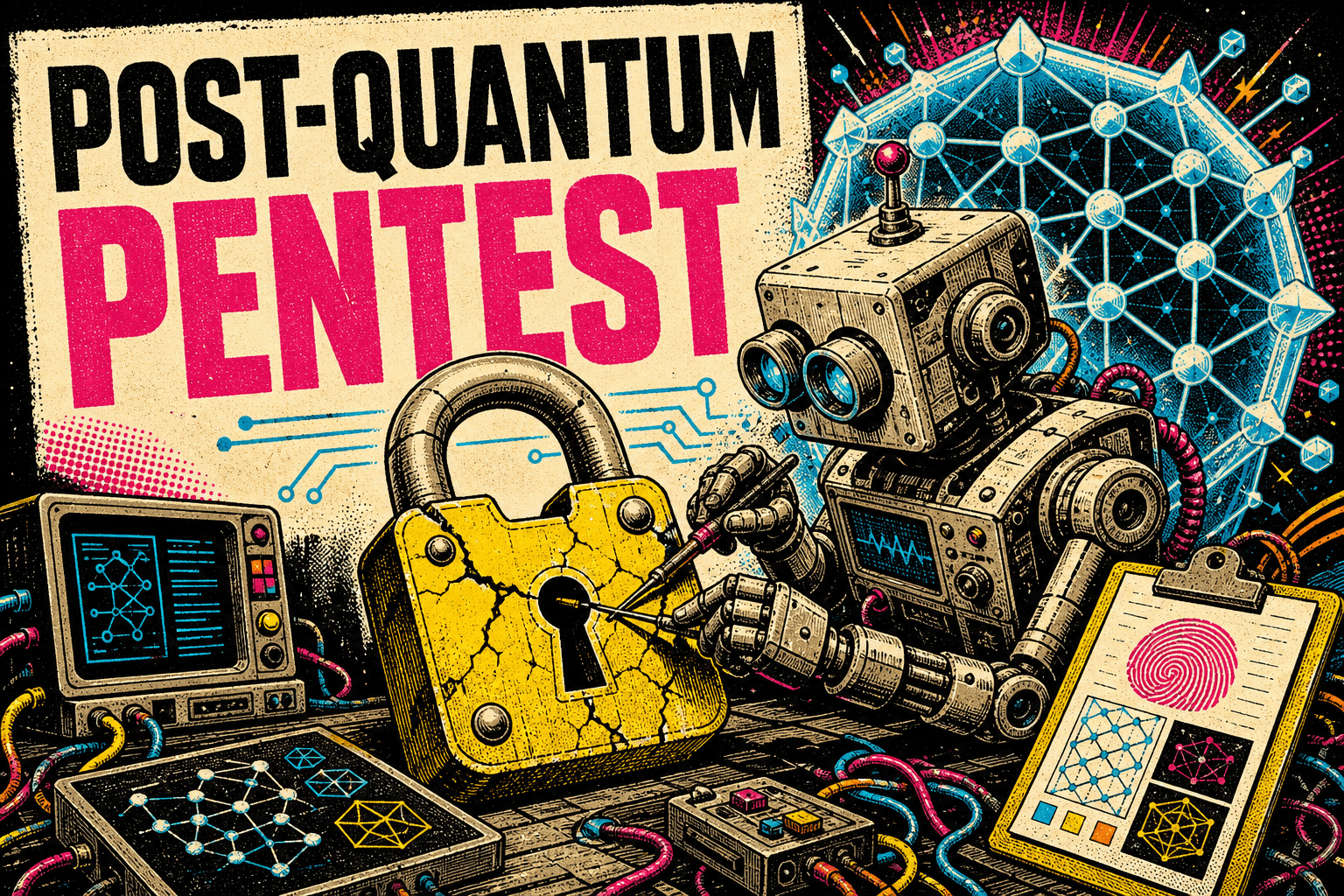
The recurring discipline
Observe the asset. Test the claim. Preserve the evidence. State the limitation.
The handbook
Each chapter opens with outcomes, develops a testable argument, connects it to a local laboratory, and closes with educator prompts.
Reframe quantum risk as a present evidence problem, then build scope, inventory, and a repeatable PAREX assessment.
Test Transit, Use, and Rest; hybrid negotiation; implementation leakage; signatures, certificates, and long-term identity.
Place QKD inside a layered assurance model and turn evidence into findings, retest criteria, and board decisions.
Run an evidence-led capstone, teach strict legal boundaries, and move from a course to a sustainable field programme.
Interactive field note
Use Mosca's timing inequality as a planning prompt. It does not predict a quantum computer; it exposes assumptions that require an owner and a review date.
8 years of planning pressure should be assigned and evidenced now.
Hands-on practice
Deterministic fixtures, standard-library Python, and two loopback-bound containers keep classroom work reproducible.
Write a rules-of-engagement gate before any probe runs.
Turn scattered configuration into a cryptographic bill of materials.
Prioritise assets using lifetime, exposure, and migration assumptions.
Compare advertised hybrid support with observed loopback evidence.
Exercise success, downgrade, and fail-closed state transitions.
Find algorithms, providers, build settings, and evidence gaps.
Measure a deliberate leak without attacking a real implementation.
Map creation, preservation, validation, and migration obligations.
Separate published design claims from evidence requests.
Render a technical finding and an executive decision record.
Validate layers, trust assumptions, and classical authentication.
Collect, normalise, analyse, and defend a complete local assessment.
For educators
Designed for university modules, professional workshops, and guided self-study alongside current certification material.
Project ecosystem
Real projects become bounded case studies. Published claims start verification; they never replace independent evidence.
Model authorised audit intent and compile evidence artefacts.
↗02Discuss readiness through six transparent, weighted dimensions.
↗03Edit protected Markdown notes and .rqmod models in a local-first workspace.
↗04A post-quantum-minded password-vault case study for threat modelling.
↗05Connect testing practice with Lithuania’s post-quantum security path.
↗06Study quantum communication infrastructure as one control in a larger system.
↗Open course materials
Every package is versioned with the manuscript and ready for local review.